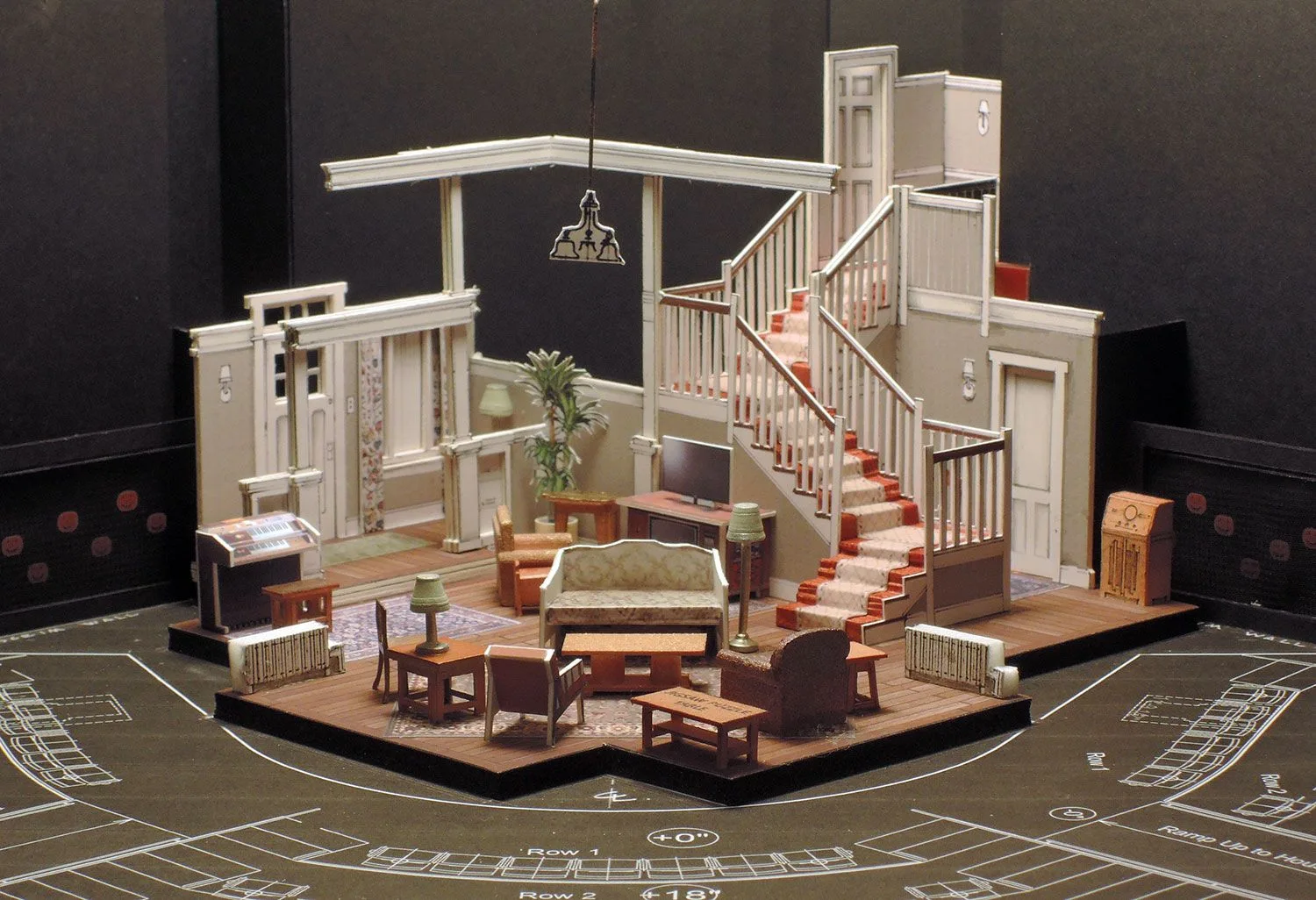
Environmental storytelling is superior to exposition dumps: Why set design should do the talking
Nothing destroys player immersion faster than an unskippable NPC delivering a ten-minute lecture explaining a fictional war.
You know the scene. Your character walks into a room, an NPC turns toward them, and suddenly you're trapped listening to a history lesson about kingdoms, betrayals, ancient treaties, and wars that happened hundreds of years ago.
The information might be important. The problem is that the player isn't experiencing the world anymore—they're being told about it.
The most memorable fictional worlds don't explain everything through dialogue. They bake their history directly into the environment. Architecture, objects, lighting, sound, and level design can communicate information without explicitly stating it.
This is the power of environmental storytelling.
Instead of saying "This city has extreme inequality," show gleaming corporate skyscrapers towering over crumbling industrial districts.
Instead of saying "The residents fled suddenly," leave dinner plates on a table, an overturned chair beside an open door, and a child's toy lying in the hallway.
The player doesn't simply receive the story.
They discover it.
---
The World Should Feel Like It Existed Before the Player
A strong environment should feel like something happened there before the player arrived—and that the world will continue after they leave.
Imagine entering an abandoned apartment.
Dust covers most of the furniture, but a relatively clean coffee mug sits on the kitchen counter. A child's drawing hangs on the refrigerator. Several boxes are packed near the entrance, but they were never carried away.
Nobody explains what happened.
Yet the player immediately starts asking questions.
Who lived here?
Why did they leave?
Why were some things packed while others were abandoned?
That curiosity is valuable.
The player is no longer passively consuming the story. They're participating in it.
---
Architecture Can Tell an Entire Story
Architecture is one of the most powerful storytelling tools because players naturally understand differences in space and status.
Imagine a city where enormous corporate towers rise above neglected industrial neighborhoods.
The wealthy district has polished floors, automated doors, private security, artificial gardens, and carefully controlled lighting.
Several streets below, people live among rusted machinery, leaking pipes, exposed wiring, and buildings that haven't been repaired in decades.
You don't need an NPC to explain the class divide.
The environment already has.
Even better, make the player physically travel between these areas. Perhaps wealthy districts sit on elevated platforms while poorer neighborhoods exist underneath them. Clean water flows through decorative fountains above, while residents below struggle with shortages.
Now the player doesn't just hear about inequality.
They move through it.
---
Micro-Stories Hidden in the Clutter
Sometimes the smallest details communicate more than a massive cinematic.
A half-eaten meal beside a barricaded door.
Rusted tools next to a dry canal.
A child's backpack beneath a collapsed staircase.
Fresh footprints inside an apparently abandoned building.
Political graffiti covered by corporate advertisements.
These details create micro-stories.
Each object becomes a piece of evidence.
Imagine finding a table with two cups of tea, a chair knocked over, an open door, and a newspaper reporting a military evacuation.
Nobody tells you what happened.
But you can connect the dots.
Maybe two people were talking when the evacuation began. Maybe one left suddenly. Maybe the other followed.
The game doesn't need to confirm every detail.
Ambiguity can make the world more interesting.
---
Lighting and Sound Create Emotional Geography
Lighting isn't just about making a game look good. It can communicate how players should feel about different locations.
High-security areas might use harsh fluorescent lighting—clean, bright, and controlled.
Underground communities could use warm lanterns and flickering bulbs.
An abandoned facility might gradually become darker as the player moves deeper inside.
Players begin associating visual styles with emotions without consciously thinking about it.
This creates emotional geography.
Sound works in much the same way.
A distant machine can suggest a factory ahead. Emergency broadcasts can indicate that something is wrong. A train running beneath the player can imply an entire transportation system outside the playable area.
Even silence can tell a story.
If a marketplace that should be crowded suddenly becomes completely quiet, the player immediately knows that something has changed.
You don't need an NPC saying, "Something terrible happened here."
The absence of sound says it for you.
---
Let Gameplay and Environment Tell the Same Story
Environmental storytelling becomes even stronger when it connects directly to gameplay.
Imagine a city suffering from severe water shortages.
You could simply tell the player that water is scarce.
Or you could design the entire environment around it.
Public fountains are empty. Water pipes are heavily guarded. People collect rainwater in containers. Shops display notices about water restrictions. The player discovers locked maintenance tunnels beneath the city.
Eventually, they find a massive water-processing facility supplying wealthy districts while poorer neighborhoods receive almost nothing.
Now the environmental storytelling isn't just decoration.
It affects how the player explores and interacts with the world.
The story and gameplay are communicating the same idea.
---
Don't Make Every Detail a Puzzle
There is one important danger: overdoing it.
Not every chair needs to indicate where a character was sitting. Not every book needs to contain a secret. Not every piece of graffiti needs to reveal critical lore.
Real places contain meaningless objects.
A kitchen has plates because people eat there.
An office has chairs because people work there.
A warehouse has boxes because warehouses contain boxes.
Sometimes clutter should simply be clutter.
The goal isn't to turn every environment into a detective puzzle.
The goal is to make the world feel like it has a believable history.
---
Trust Your Players
The most important principle is simple:
Trust the player to notice.
Not every historical event needs a ten-minute monologue. Not every character needs to explain exactly how they feel.
Sometimes a broken photograph is enough.
Sometimes an empty chair is enough.
Sometimes the architecture of a city can communicate more about its politics than an entire encyclopedia.
Environmental storytelling doesn't mean eliminating dialogue or cutscenes. Those tools still have their place.
The goal is to make sure the world itself is also capable of speaking.
Because when players discover a story instead of simply being told one, the experience changes.
They're not just listening to the history of your world.
They're walking through it.
And when you trust players to observe, interpret, and connect the dots, world-building stops feeling like homework.
Exploration becomes active deduction—and the environment becomes one of your game's most important storytellers.
World-building stops feeling like homework and turns exploration into active deduction." Louder for the corporate studio executives in the back! 👏 Half the fun of games like BioShock or Dark Souls is just looking at a room and piecing together the tragedy that happened there. When you spell everything out via an audio log, you take away the player's agency to explore.
As an environment artist, this post makes me so happy. We spend hundreds of hours placing clutter, adjusting decal layers, and texturing walls specifically to tell these micro-stories. It’s incredibly rewarding when players actually stop to notice things like a rusted tool sitting next to an old diary, rather than just sprinting past to the next checkpoint marker.
This is actually a massive budget-saver for indie devs too. Writing, voice acting, and animating 10 minutes of exposition dialogue costs thousands of dollars and takes weeks. Clever set design, smart lighting choices, and a few environmental assets can communicate the exact same emotional vibe for a fraction of the cost. Bookmarking this! 🚀
This is actually a massive budget-saver for indie devs too. Writing, voice acting, and animating 10 minutes of exposition dialogue costs thousands of dollars and takes weeks. Clever set design, smart lighting choices, and a few environmental assets can communicate the exact same emotional vibe for a fraction of the cost. Bookmarking this! 🚀
Nothing makes me hit the "skip dialogue" button faster than an NPC giving me an encyclopedia lecture on world history. Let me see the bullet holes in the walls! Let me see the abandoned barricades! Showing that contrast between the gleaming corporate towers and the concrete slums tells me everything I need to know about who the villains are without a 10-minute cutscene.
Great breakdown, Maggie! However, do you think environmental storytelling has a limit? It works perfectly for building atmospheric lore and background history, but can it handle complex, plot-heavy character arcs or intricate political twists without some dialogue or text to anchor it? I feel like the absolute best games manage a perfect 50/50 balance between the two.